
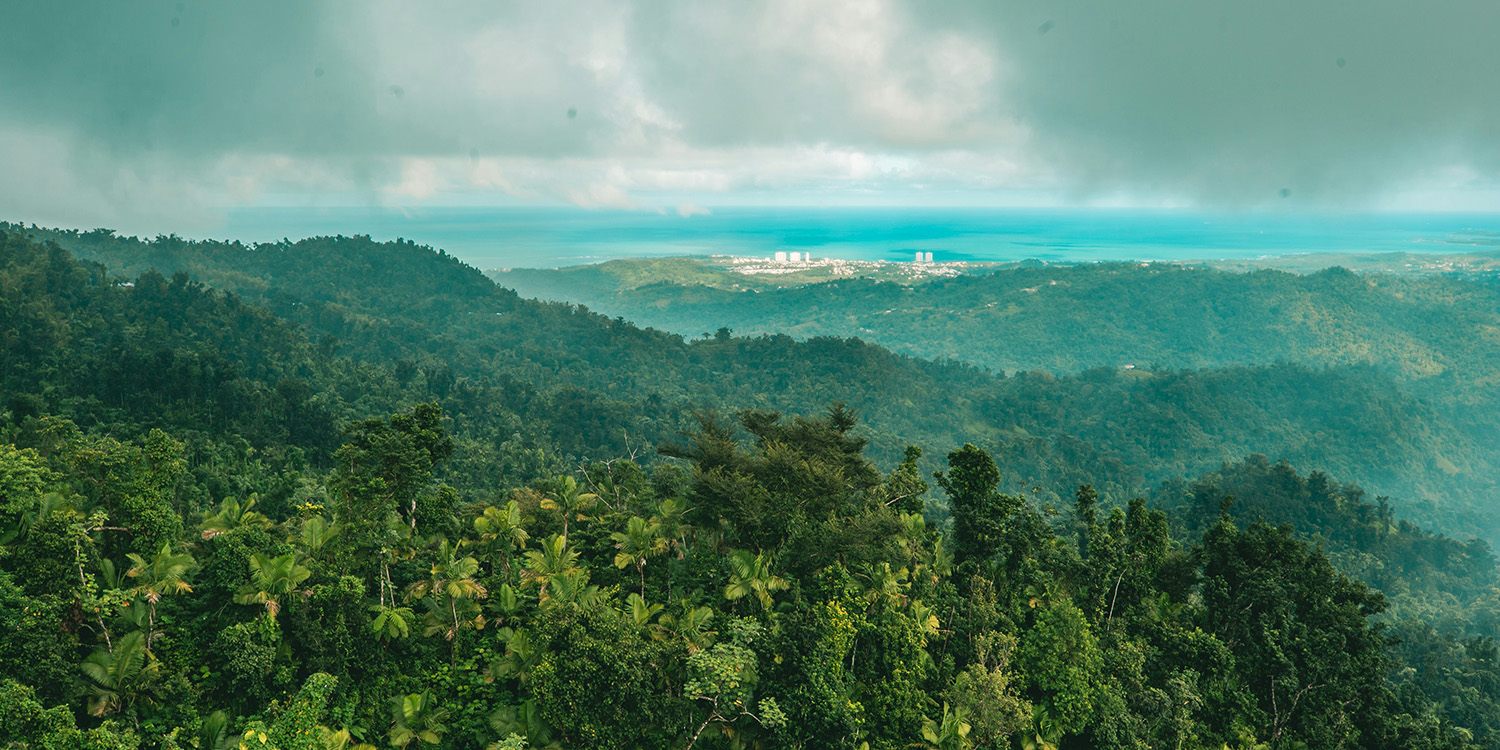
Upon listening to Bad Bunny’s sixth solo studio album, a diasporic writer is hit with a wave of longing for Hawai‘i, her home, and the memories we fight to keep.
Every time I tell someone I’m from Hawai‘i and they respond, “You’re so lucky,” I feel a wave of grief. Not because I disagree, but because I doubt they see the cost of leaving its beauty behind, my home’s layered histories, or the feeling of displacement I now carry as a former kamaʻāina who, like so many others, was priced out of paradise. In January, driving home from my job in Texas, I discovered Bad Bunny’s latest studio album, Debí Tirar Más Fotos, which translates to “I Should Have Taken More Photos.” The image on the album cover reminded me so much of my own island home: banana trees hanging in the background; two white plastic patio chairs sitting idly on green grass, a sign that somebody’s home is a place of gathering, storytelling, laughter, and music. Had I seen this photo outside the context of this album, I would have assumed it was taken in the backyard of some aunty or uncle’s hale in Waimānalo. I’d imagine two uncles sitting on those plastic chairs, one jamming on the ʻukulele while the other sings “Honey Baby” by Three Plus. Out of frame, I could even see family members scrambling to prepare for a pāʻina. Then my mind makes an uneasy shift and wonders: What happens when family parties become less frequent as loved ones move away from their roots? When beloved backyards get trampled over by tourists? When a nation is illegally overthrown…yet outside of Hawai‘i, no one seems to know it happened. As I ponder these questions, I scroll through the album’s tracklist and find a song title mentioning my home’s name, “Lo Que Le Pasó A Hawai‘i.”
I think about how much I miss home at least once a day. Sometimes, it lasts only a few seconds, and it passes. Other times, it can be for an hour, and I start to cry. Sometimes I cry because I’m afraid. My grandma turns 90 this year, and the thought haunts me that someday the phone will ring, and I’ll have to confront the weight of all the days I didn’t spend with her. “Balasang ko,” she’d say with a tired smile. “You coming to da parteh dis year?” with her voice echoing like a ritual prayer I wish I had answered more often. I’m afraid because glaucoma finally laid its hands on my father, slowly stealing the light from his eyes. I’m afraid because my nephew’s voice isn’t the same; it’s grown a deep, unfamiliar bass, like time snuck in while I was gone and rewrote his childhood in a lower key.
Then there’s the fear that creeps up when I do have pockets of time to visit. I go home as often as I can, but each return comes with its own kind of ache. I’m afraid because what we called a secret beach is now marred with foreign feet chasing souvenir moments, trying to bottle up my home like a keepsake. Each time I return, things feel heavier and more crowded. My loved ones, aging in place, their roots struggling to grip the very land they were born on as the shoreline shifts, and I wonder how many more people are left to tell the story of what used to be.

Just like I find myself holding grief for what Hawai‘i is becoming, Bad Bunny’s latest record carries a similar ache for his birthplace, Puerto Rico. Bad Bunny, known for his trap instrumentals, bold lyrics, and rhythmic reggaeton beats, surprised everyone with the overtly political content of his latest work. Released in January 2025, some noted its similarities to Puerto Rican singer and rapper Residente’s politically charged music. But that’s to be expected of the 47-year-old Residente, not the 31-year-old household name Bad Bunny. On DTMF, Bad Bunny, born Benito Antonio Martínez Ocasio, explores Puerto Rican identity and draws inspiration from indigenous Taíno culture, inspired by a love for his home, his people, and his passion for cultural resistance against colonialism. All of this is intertwined with instrumentals rooted in genres like salsa, dembow, bomba, and plena, all born from the struggles of oppressed peoples seeking freedom and expression. A short film accompanying the album, available on YouTube, tells a story of the changes an elderly Puerto Rican man witnesses as he reminisces over sentimental photos of what Puerto Rico used to be. He strolls through his gentrified neighborhood and orders food from his local panadería, which is no longer the same.
In English, Bad Bunny’s cautionary song, “Lo Que Le Pasó A Hawai‘i,” translates to “What Happened to Hawai‘i.” His lyrics, sung in a low baritone, give the song a haunting, mournful, even spiritual tone. One of his verses says, “They want to take the river / they want to take the village / and they want my grandma to leave. / No, don’t forget the flag / nor forget the Le Lo Lai. / Cause I don’t want them to do to you what happened to Hawai‘i.” Like Hawai‘i, outsiders interested in tourism and urbanization see tropical islands like Puerto Rico as nothing but dollar signs. Hawai‘i has seen—is seeing—the consequences of such extractive practices: born-and-raised Hawaiians and locals forced to move away under economic strain, supplanted by transplants with very little understanding of Hawaiian history.
What makes Bad Bunny’s lyrics even more resonant is that the instrumentals in “Lo Que Le Pasó A Hawai‘i” feature traditional Puerto Rican instruments, all of which are grounded in cultural resistance and pride: the cuatro, a small, 10-stringed instrument developed by the Jíbaro people, the indigenous mountain-dwelling people of Puerto Rico; the pandero, a type of handheld frame drum rooted in Afro-Caribbean resistance and commonly used in plena and bomba music; the güiro, a percussion instrument made of a hollowed-out gourd that’s played by scraping a stick on the notches on its surface. Some would argue that there are similarities between these traditional instruments, which are used not only for music but also to carry oral history, spirituality, and resistance, reminding us of the ʻukulele, ipu, and pahu. Both Hawaiian and Puerto Rican cultures have utilized and continue to use string, percussion, and natural instruments to pass on vital stories. For me, Bad Bunny’s haunting vocals, combined with the repetition of these instruments, call to mind the mele “Kū Ha’aheo E Ku’u Hawai‘i” by Kumu Hinaleimoana Wong-Kalu because both are reclamation stories in native tongues that uplift indigenous and local people to resist and stand proud in their unique identities.
Although one place is an island in the Caribbean and the other is an archipelago in the middle of the Pacific, both are bound by similar experiences of colonial histories and political struggles. In DTMF, Bad Bunny sings, “You hear the jíbaro crying, another one who’s left. / He didn’t want to leave to Orlando, but the corrupt ones pushed him out,” and “I hope my people never have to move away.” Nichole Mercado, a native Puerto Rican and current Texas resident, explains that although she did not want to leave her home, she felt like she had to. “Displacement,” Mercado says, “is taking you away from your roots. Taking away your sense of belonging. Everything is changing because of gentrification. You can still come back to your community, but you don’t feel like you belong. I had a community. I had support. I had my family. And it’s such a heartbreaking experience when you need to make that trade-up for you or your children.”
Just like I find myself holding grief for what Hawai‘i is becoming, Bad Bunny’s latest record carries a similar ache for his birthplace, Puerto Rico.
In both Puerto Rico and Hawai‘i, homes that once held generations of stories are now listed as vacation rentals. The cost of living keeps rising, and tourists stream through like plastic bottles caught in ocean tides—fast, constant, and impossible to contain. As communities are pushed out, what’s left is a haunting sense of nostalgia for a home that’s still there but no longer ours in the same way.
In Hawai‘i, the Economic Research Organization at the University of Hawai‘i reported in 2023 that around 5% of the state’s local housing units now operate as tourist accommodations — 4.7% of those listed on Airbnb alone. To put that in perspective with another high-cost city, San Francisco has only 1.4% of its housing stock listed as STRs. Puerto Rico faces similar pressures. In San Juan, Cataño, and Aguadilla, short-term rentals now account for more than half of all available housing units.
Rubin Marin, a Puerto Rican native and FEMA employee who worked on post-Hurricane María recovery efforts in 2017 and later assisted after the 2023 Maui wildfires, witnessed firsthand how disaster can attract opportunism. “Investors were quick to buy up properties in the most devastated areas,” he recalls, often places with displaced residents still mourning their losses.
After Hurricane María, Puerto Rico saw housing prices spike by 22% between 2018 and 2021, according to CNE 25, the island’s independent think tank. A striking increase also emerged on Maui post the Lahaina fires in 2023. A report from the University of Hawai‘i at Mānoa this past March found that rent in Lahaina remains 50 to 60% higher for fire-impacted households, while 90% of burn area residents remain displaced.
“There are more Puerto Ricans on the mainland than in Puerto Rico,” Marin also points out. It’s a reality he’s seen reflected in his own family, and in Hawai‘i, too. “The similarities are stark,” he says. “Everyone in Puerto Rico has at least one family member who left the island. Some left for better opportunities. Others had no choice.”
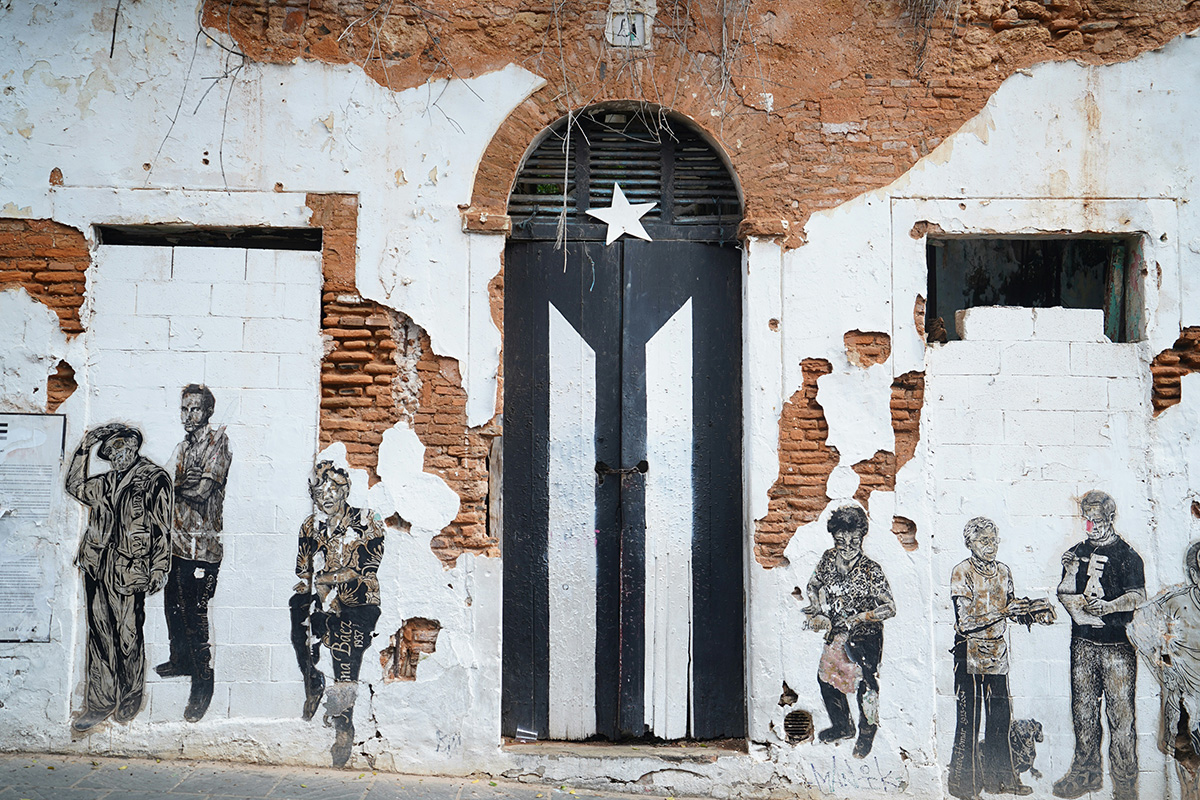
According to the U.S. Census, there are approximately 4.2 million Puerto Ricans living in the continental U.S., which is about 400,000 more than on the island. The Native Hawaiian community has followed a similar alarming trend. In 2020, the U.S. Census reported that only 47% of Native Hawaiians lived in Hawai‘i, while 53% now live on the continent where that population is also growing five times faster than in Hawai‘i.
Marin explains that the reasons for leaving are often rooted in economics. “Everything is more expensive. Salaries are lower. Even the sales tax is higher. It’s hard to stay.”
Then he tells a story. “I was walking through Waikīkī, past the Chanel store, and saw a brown man who looked local—probably houseless—setting up camp on the sidewalk right after the store closed. That moment stuck with me,” he says. “That’s what Bad Bunny is talking about. Tourism and investors come into places like Puerto Rico and Hawai‘i, and the people who actually belong there are the ones being pushed out.”
Like Bad Bunny sings in “Lo Que Le Pasó A Hawai‘i”: “No one here wanted to leave, and those who left all dream of coming home.” The fear of never making it back is one thing. But coming back and finding that home is no longer yours…that’s the fear that lingers. Like a secret beach that couldn’t stay hidden, the loss is quiet but permanent. Maybe photos aren’t enough. Maybe what we really need is to protect what’s still here before it’s retold, renamed, and remembered by people who were never meant to inherit it.