
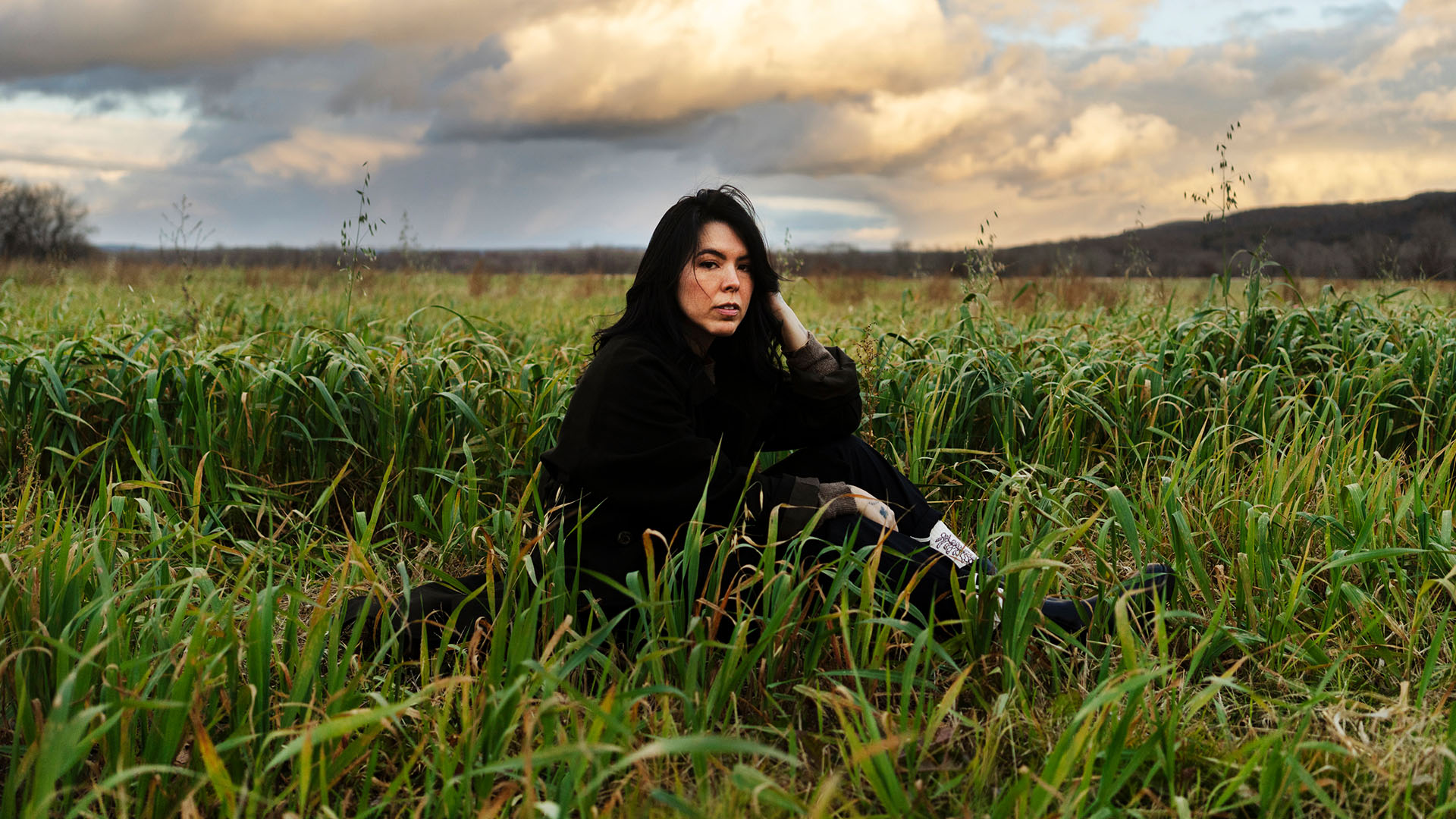
After surviving a stalker, memoirist T Kira Māhealani Madden turned to polyphonic fiction. The result is a probing novel about revenge, trauma, and the messy afterlives of abuse.
Images by Jillian Freyer
In April 2017, the writer T Kira Māhealani Madden boarded a ferry to Whidbey Island, just north of Seattle, Washington, where she had been accepted into the Hedgebrook writing residency. What was intended to be a creative program supporting projects by women-identified writers from around the world would also become, for Madden, a deeply personal refuge. For months prior she’d been living in constant exhaustion and fear after publishing a literary essay online in late 2016 about being sexually abused as a child, which prompted the man who abused her to begin an aggressive stalking campaign; over time, it spiraled into death threats, the purchase of a firearm, and a federal investigation. So when a male passenger Madden met on the ferry asked her why she looked so sad, the question hardly surprised her.
More shocking to her, however, was how quickly she divulged her story to him, a complete stranger, and his disturbing response: a proposal for a revenge plot akin to Patricia Highsmith’s Strangers on a Train, a psychological thriller about two people who attempt to swap murders. Madden quickly laughed away his suggestion, but their exchange lingered long after she exited the ferry: How would it have felt, she wondered, to say yes to this scheme? To indulge, wholeheartedly, in a fantasy of revenge?
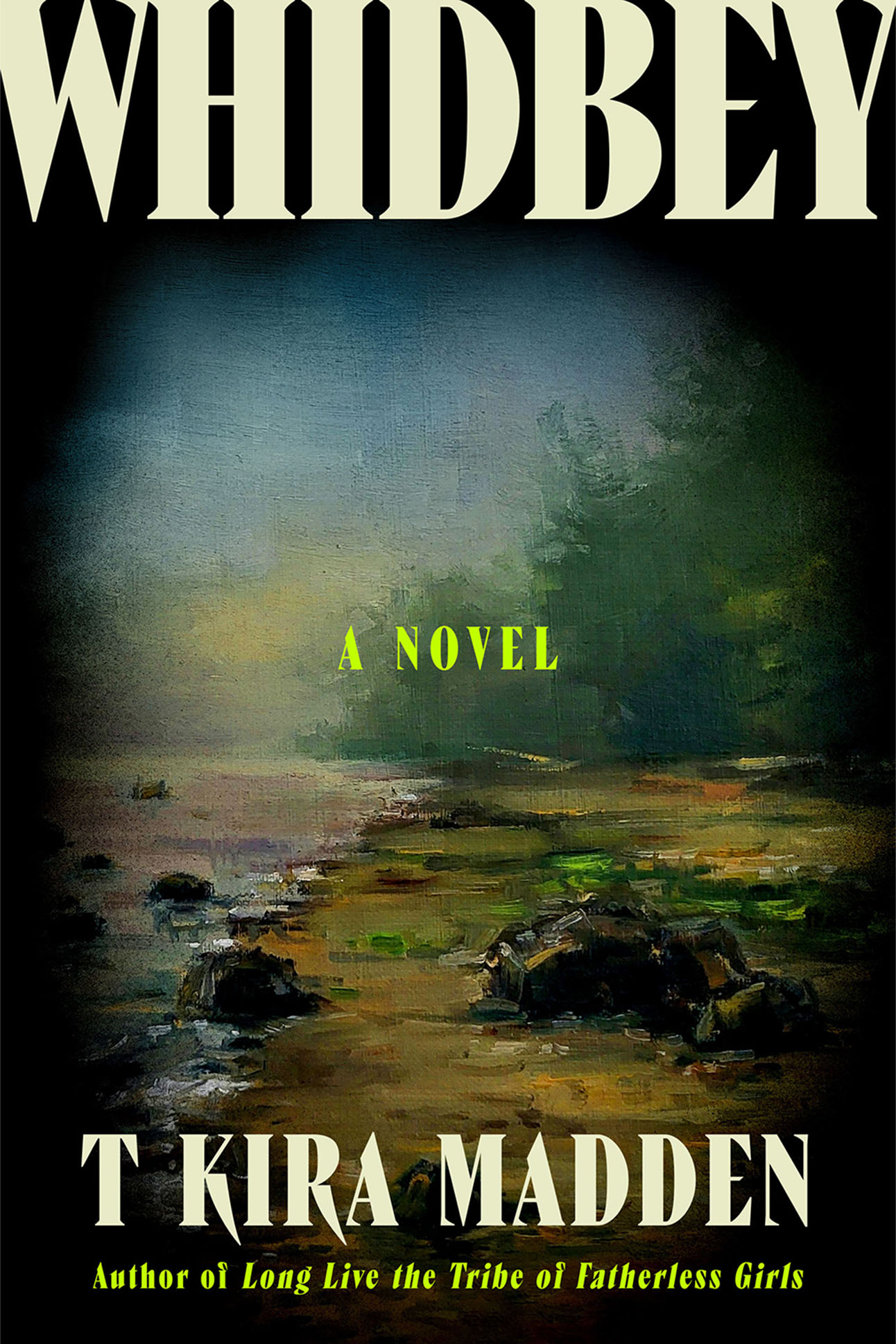
Whidbey, Madden’s searing, empathetic, and darkly propulsive debut novel, is her response to those questions. The book weaves together the lives of three very different women who were impacted by the same child molester: Birdie Chang, a self-proclaimed “dyke” from Brooklyn, and Linzie King, a reality TV star turned best-selling memoirist, who were both abused by him; and the perpetrator’s plucky mother, Mary-Beth Boyer, a gas station attendant in Florida who remains endlessly devoted to him. When Mary-Beth learns of her son’s murder, Whidbey turns into a whodunit, but the book seems more interested in probing its characters from unexpected angles than identifying a murderer, exposing the long web of trauma that accompanies abuse.
The novel is a bold but not entirely surprising leap from Madden’s first book, Long Live the Tribe of Fatherless Girls, which was a finalist for the John Leonard Prize, an award from the National Book Critics Circle that recognizes the best first book in any genre. Released in 2019, the queer coming-of-age memoir follows Madden’s childhood growing up in Boca Raton, Florida, where she was raised by a Chinese Hawaiian mother and a Jewish father, in a house as privileged as it was dysfunctional. Widely celebrated, the New York Times selected it as an Editors’ Choice, calling it “compulsively readable” while praising Madden’s devastating humor and “gift for salient detail.”
“The first book was all about forgiveness, in ways that I didn’t even realize when I started writing it,” says Madden, 37, speaking to me from Massachusetts, where she’s an assistant professor in creative writing and Indigenous literatures at Hamilton College. “It became a project of listening, understanding, finding compassion, and asking the question, ‘Why?’ ‘Why would my mom choose this?’ ‘Why was my dad like this?’”
Whidbey, on the other hand, “was an exploration of anger,” she says. “All of these characters are really angry for different reasons, and that’s what I wanted to keep digging at: rage — how it manifests when it’s obsessive rage, and what it looks like when it’s repressed.”
Locating her anger didn’t come naturally to Madden. About a decade ago, while workshopping a chapter in her memoir about her mother’s attempted overdose, she remembers the writer Lidia Yuknavitch asking her, “Where does your rage live?” “And I realized I couldn’t find it anywhere in my body,” Madden says. “I couldn’t find it on the page.”
A few years later, Madden discovered that rage through her abuser’s stalking campaign, which resulted in a trial and conviction. During her residency on Whidbey Island, Madden made multiple trips to Florida to appear in federal court, where she gave lengthy victim impact statements to move forward with her injunction. Her anger, she found, extended far beyond her abuser and into the systems that had failed him.
As I worked through all the characters and voices, I asked myself to try eight ways of seeing or understanding, at least eight ways of saying it.
T Kira Māhealani Madden
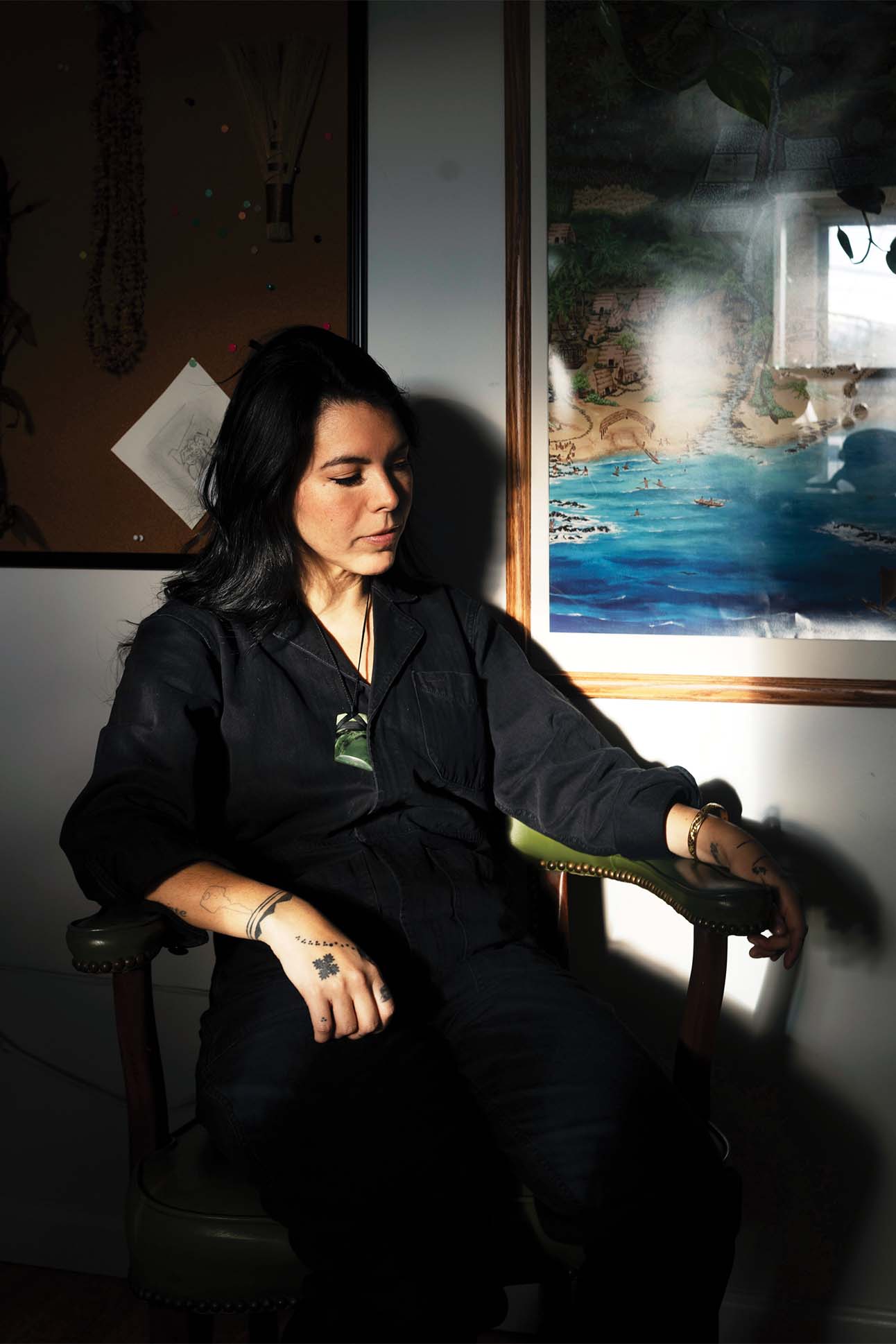
“When I learned that my abuser had been denied mental health care over and over again, and that people who disclose to a therapist or a doctor that they feel attracted to children are not provided support, and are in fact reported to the police, I felt really angry about that,” says Madden. “That’s something that impacts [my abuser], but it also impacts survivors that we supposedly care about.”
At their hearts, both Long Live the Tribe of Fatherless Girls and Whidbey are complex character studies, the work of a writer interested in taking an unflinching, sometimes funny, often painful look at people who’ve caused harm, and finding ways to empathize with them anyway. “Trying to find the humanity or the fullness of a person is how I can deal with the terrible things they do,” says Madden, who, in spring 2024, was a Distinguished Writer in Residence at the University of Hawai‘i at Mānoa. “Otherwise, it feels unbearable to me.”
To help her achieve Whidbey’s intricately woven storytelling, Madden says she employed the Native Hawaiian concept of makawalu, which translates to “eight eyes.” “Writing is meditation and summoning to me, with many silences between the lines and pages,” she says. “In this polyphonic book, as I worked through all the characters and voices, I asked myself to try eight ways of seeing or understanding, at least eight ways of saying it.”
As an amateur magician, she also considers the importance of surprise — the mechanics of illusion and the pitterpatter meant to disguise a narrative sleight of hand. On days off from teaching, when she was lucky enough to write, she gave herself a prompt: write into three surprises, or things she didn’t see coming about her own characters.
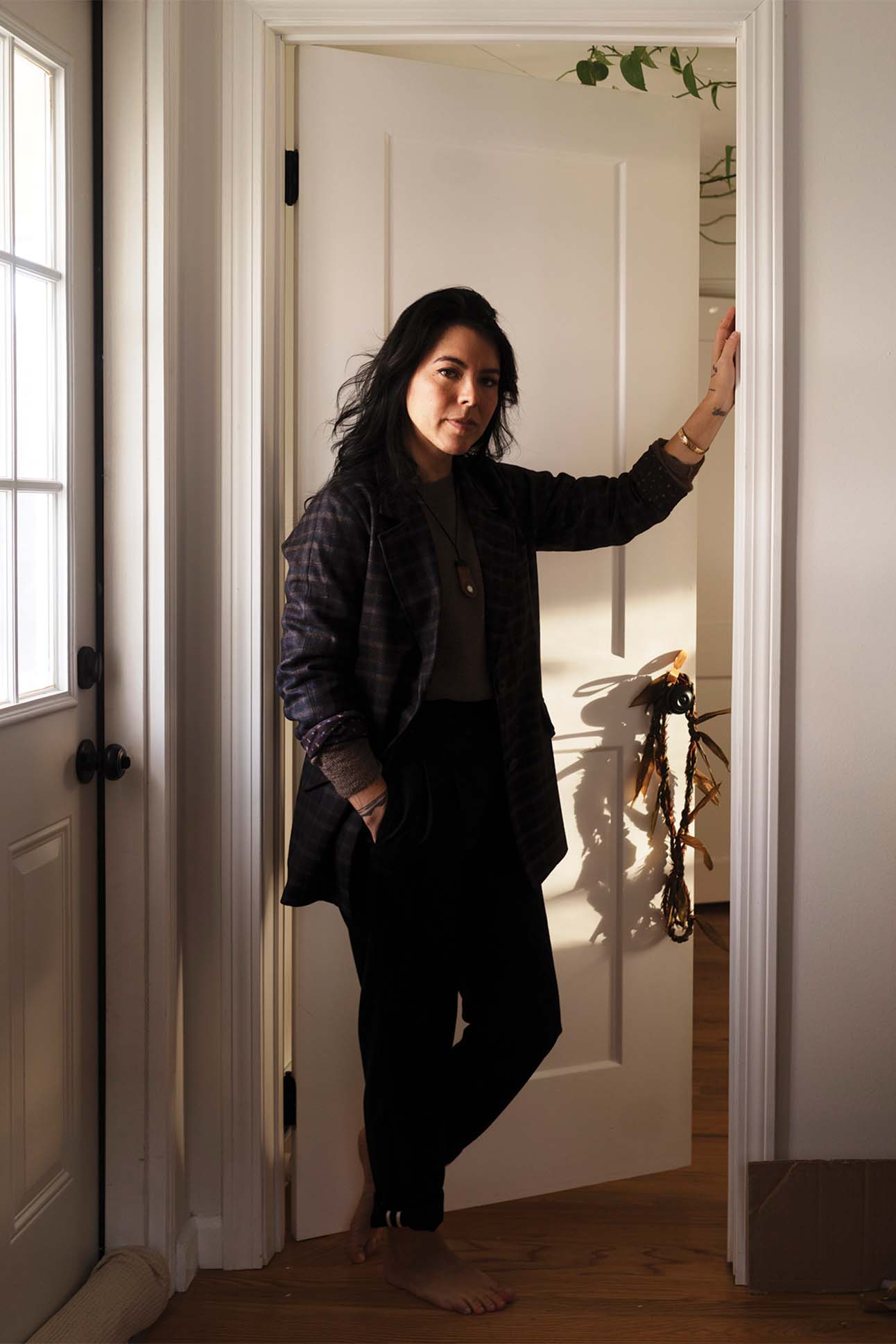
“I feel like writing for me is just tapping the ground over and over again, looking for a trap door,” she says. “And it’s often a day, or days, of tapping around and hearing nothing until you find the spot that opens.”
Despite some autobiographical parallels — like the book opening with Birdie meeting a stranger on a ferry to Whidbey Island who offers to kill the man who abused her — Madden wants to be explicitly clear: Whidbey is not a work of autofiction. As she writes in the book’s foreword: “None of the characters in Whidbey represent my own experience; I have the genre of memoir for that.” But, “I would say that the questions that drive each character felt true to my life,” she says, highlighting the thorny question of who gets to “own” a narrative of suffering — something Madden encountered as a “credible witness” in court by virtue of being a published writer working in academia.
Not that Whidbey offers anything in the way of answers. By exploring her own anger through fiction, Madden says she learned that there are no tidy resolutions, that the redemptive allure of a revenge fantasy is just that: pure fantasy. “Grief doesn’t stop. Healing, rehabilitation, all these things are false,” she says. “There is no end. There is no crossing of a threshold as much as we’d like to believe that’s true. It’s just something that remains in flux.”